The Wittelsbach dynasty ruled Bavaria for 738 years — from 1180 until the monarchy ended in 1918. This is one of the longest hereditary rules in European history, and the family’s stamp on Munich is everywhere: the Residenz palace, Nymphenburg, the Pinakotheken art museums, Ludwig I’s Königsplatz, and the famous fairy-tale castles of Ludwig II all exist because of Wittelsbach patronage. Understanding the dynasty unlocks Munich’s deepest layers. This complete Wittelsbach dynasty Munich guide for 2026 walks through the major rulers, the architectural and cultural monuments they left behind, the dramatic stories (from the Beer Hall Putsch to King Ludwig II’s mysterious death), and the family’s surprising modern presence.
Quick Wittelsbach Timeline
| Year | Event |
|---|---|
| 1180 | Otto I of Wittelsbach receives Bavaria from Friedrich Barbarossa |
| 1255 | Munich becomes the official Wittelsbach residence |
| 1506 | Bavaria reunified under Albrecht IV; Munich becomes capital |
| 1583–1597 | Construction of Michaelskirche (St. Michael’s Church) under William V |
| 1623 | Maximilian I elevated to Prince-Elector |
| 1664 | Construction of Nymphenburg Palace begins |
| 1742–1745 | Karl VII becomes Holy Roman Emperor (the only Wittelsbach to hold this title) |
| 1806 | Bavaria becomes a kingdom; Maximilian I Joseph becomes the first King of Bavaria |
| 1825–1848 | Reign of Ludwig I; Königsplatz and Ludwigstraße built |
| 1864–1886 | Reign of Ludwig II; Neuschwanstein, Linderhof, and Herrenchiemsee castles |
| 1886 | Ludwig II declared insane, deposed, and dies in mysterious circumstances |
| 1886–1912 | Prince-Regent Luitpold rules during “belle époque” Munich |
| 1918 | King Ludwig III abdicates; Wittelsbach monarchy ends |
| 1928 | Crown Prince Rupprecht refuses Hitler’s offer to restore the monarchy |
The Origins: A Dynasty Begins (1180)
The Wittelsbach dynasty traces its origin to Otto I of Wittelsbach (1117-1183), a Bavarian count who served Emperor Friedrich Barbarossa during the late 12th century. The two men fought together in Italy and the Holy Land; in 1180, Barbarossa stripped Bavaria from the previous Welf dynasty and granted it to Otto. The Wittelsbachs took possession of Bavaria — and held it without interruption for 738 years. Otto’s son took the title of Pfalzgraf bei Rhein (Count Palatine of the Rhine) in 1214, adding the Rhineland Palatinate to family holdings. By 1294, the family had split into two main branches: the Bavarian Wittelsbachs (who would rule Munich) and the Palatine Wittelsbachs (who ruled the Rhineland Palatinate). Both branches produced kings of various European kingdoms over the centuries — Wittelsbach members have held the thrones of Bohemia, Hungary, Sweden, Denmark, and Greece at various times. The family produced one Holy Roman Emperor (Karl VII, 1742-1745) and one King of England (William III, 1689-1702, who was actually a Wittelsbach via the Palatine line).
Munich Becomes the Capital (1255-1506)
Munich became the Wittelsbach residence in 1255 when Duke Ludwig II of Bavaria moved his court here. The settlement of “by the monks” — founded 1158 — grew rapidly under Wittelsbach patronage. The Old Town walls were built (~1175); the original Residenz palace established (~1385); the Frauenkirche cathedral constructed (1468-1488); the Old Town Hall built (~1470). The unified Bavarian state we recognize today crystalized in 1506 under Duke Albrecht IV, when Bavaria’s split duchies were reunited and Munich confirmed as the single capital. The Wittelsbach economic and political dominance through this period created the financial base for the lavish royal patronage that defined the later centuries.
The Renaissance and Counter-Reformation Wittelsbachs (1500-1650)
Duke Albrecht V (ruled 1550-1579) was the first Wittelsbach to make Munich a major European art center. He built the Antiquarium inside the Residenz — a 66-meter Renaissance hall to display the family’s collection of Greek and Roman antiquities (still the largest Renaissance hall north of the Alps). He commissioned scholars to translate ancient texts; he supported Catholic Counter-Reformation theology; he established the Hofbibliothek (Court Library, now the Bavarian State Library) that became one of Europe’s great research institutions. His son and grandson continued the program: Duke William V (1579-1597) built the Michaelskirche — the largest Renaissance church north of the Alps — as a Counter-Reformation spiritual flagship. Duke Maximilian I (1597-1651) was the first Wittelsbach to be elevated to Prince-Elector status (in 1623), making him one of the seven rulers who chose the Holy Roman Emperor. Maximilian also led the Catholic League during the Thirty Years’ War — fighting Protestant forces who briefly occupied Munich in 1632.
Baroque Splendor (1650-1780)
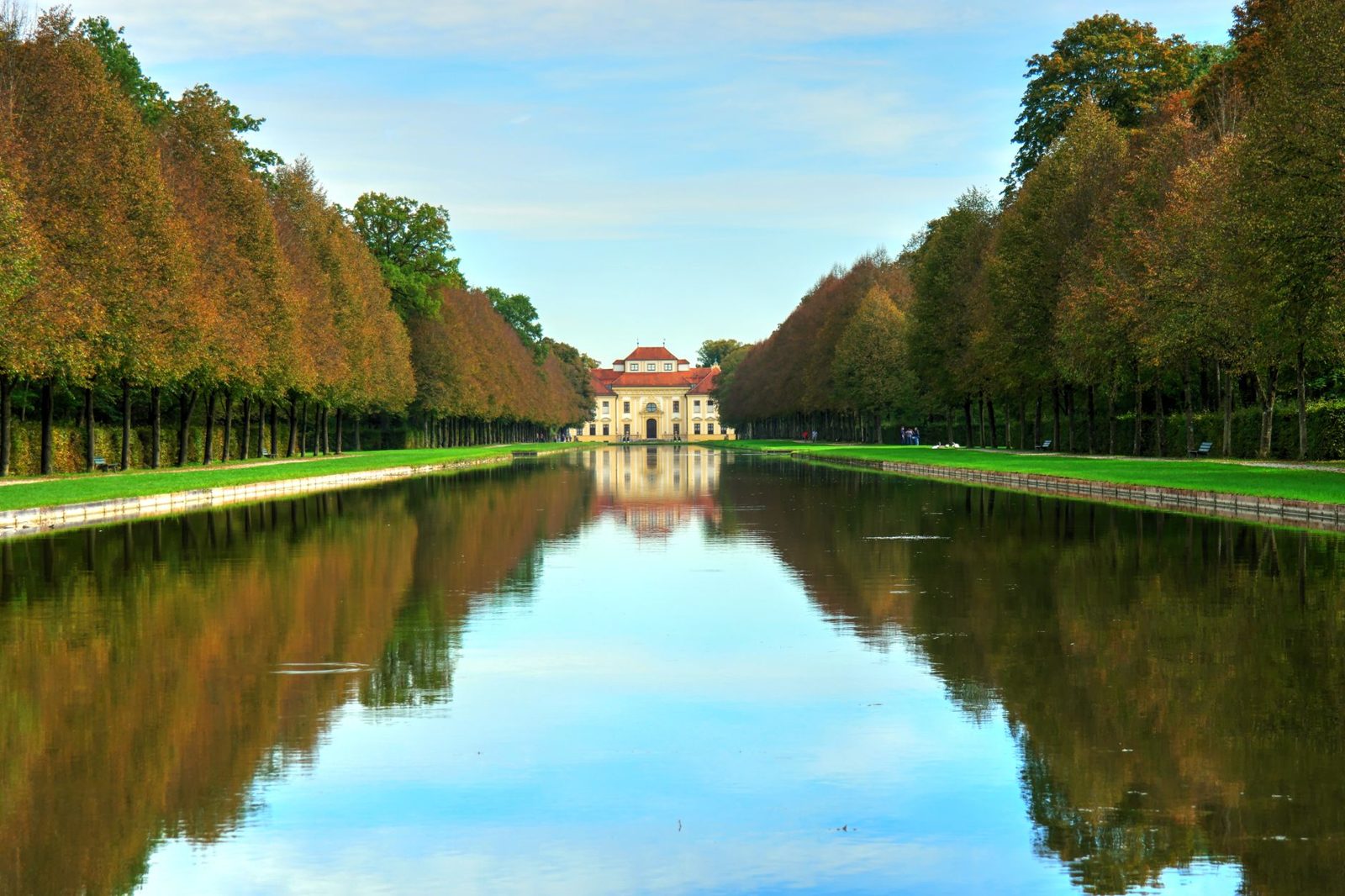
The Baroque era brought the Wittelsbach’s most beloved Munich monument: Nymphenburg Palace. Construction began in 1664 as a summer retreat for Electress Henriette Adelaide of Savoy, a gift from her husband Elector Ferdinand Maria celebrating the long-awaited birth of an heir. The original villa grew over the next century into one of Europe’s largest royal residences — a 632-meter-wide Baroque palace with formal gardens, canals, and four exquisite Rococo pavilions. The Amalienburg hunting lodge in the park (1734-39, designed by François Cuvilliés) is one of the supreme masterpieces of European Rococo. Other major Wittelsbach buildings of this era: the Theatinerkirche (1663-1690, modeled on Sant’Andrea della Valle in Rome), the Cuvilliés-Theater inside the Residenz (1751-55, where Mozart conducted), and Schloss Schleißheim (1701-1726, the “Bavarian Versailles”).
The Royal Era: Kings of Bavaria (1806-1918)
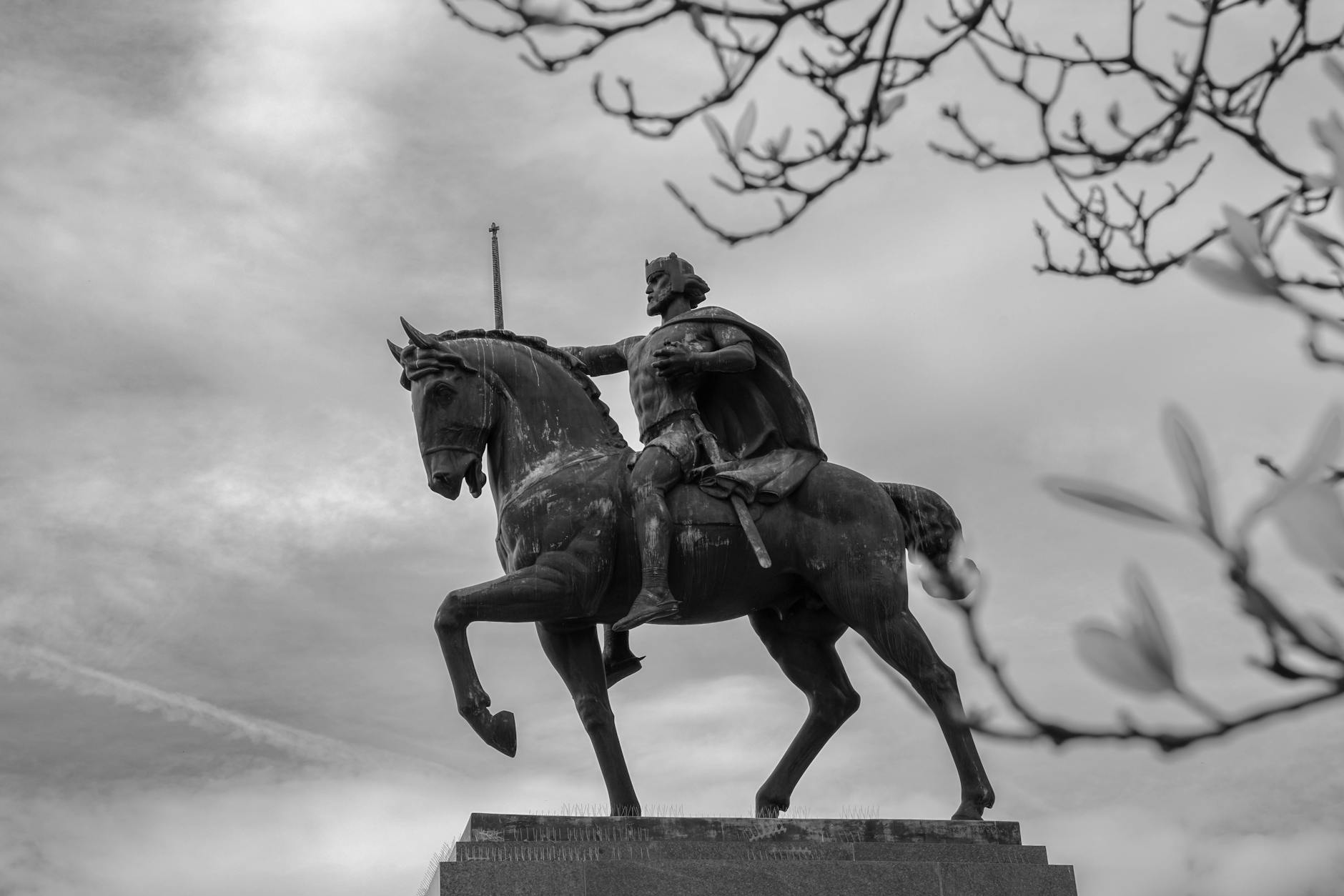
In 1806, Napoleon elevated the Electorate of Bavaria to a Kingdom — making Maximilian I Joseph the first King of Bavaria. The Wittelsbach kings of the 19th century are the rulers most visitors remember today, each leaving a distinctive Munich legacy.
Maximilian I Joseph (1806-1825) — The First King
Maximilian I Joseph was the practical founder of the modern Bavarian state. He oversaw the absorption of substantial new territory (Salzburg, Tyrol, Würzburg, Bamberg, large parts of Franconia) that nearly doubled Bavaria’s size. He introduced a modern constitution (1818) — Bavaria became one of the first German states with a parliamentary system. He founded the institution that would become the LMU University. He died in 1825, succeeded by his son Ludwig I.
Ludwig I (1825-1848) — The Architect King
Ludwig I is the Wittelsbach who most defines modern Munich’s appearance. His 23-year reign transformed Munich into what he called a “New Athens” — modeled on classical Greek and Italian Renaissance ideals. Königsplatz, with its Doric Propyläen and Ionic Glyptothek; Ludwigstraße, the kilometer-long ceremonial boulevard punched north from Odeonsplatz; the Alte Pinakothek, one of the world’s first purpose-built public art museums; the Walhalla hall of fame near Regensburg — all are Ludwig I commissions. His reign ended in scandal: at age 60, he became obsessed with the Irish-born dancer Lola Montez. The 1848 European revolutions, combined with public outrage over the Montez affair, forced his abdication. He retreated to the Walhalla and wrote poetry until his death in 1868.
Maximilian II (1848-1864) — The Building Era
Maximilian II built his own grand boulevard — Maximilianstraße — running east from the Residenz to the Maximilianeum on the far bank of the Isar. The Tudor-Gothic-Renaissance hybrid “Maximilian style” buildings still line the street; it’s now Munich’s premier luxury shopping district. He died young, at age 53, of meningitis.
Ludwig II (1864-1886) — The Fairy-Tale King
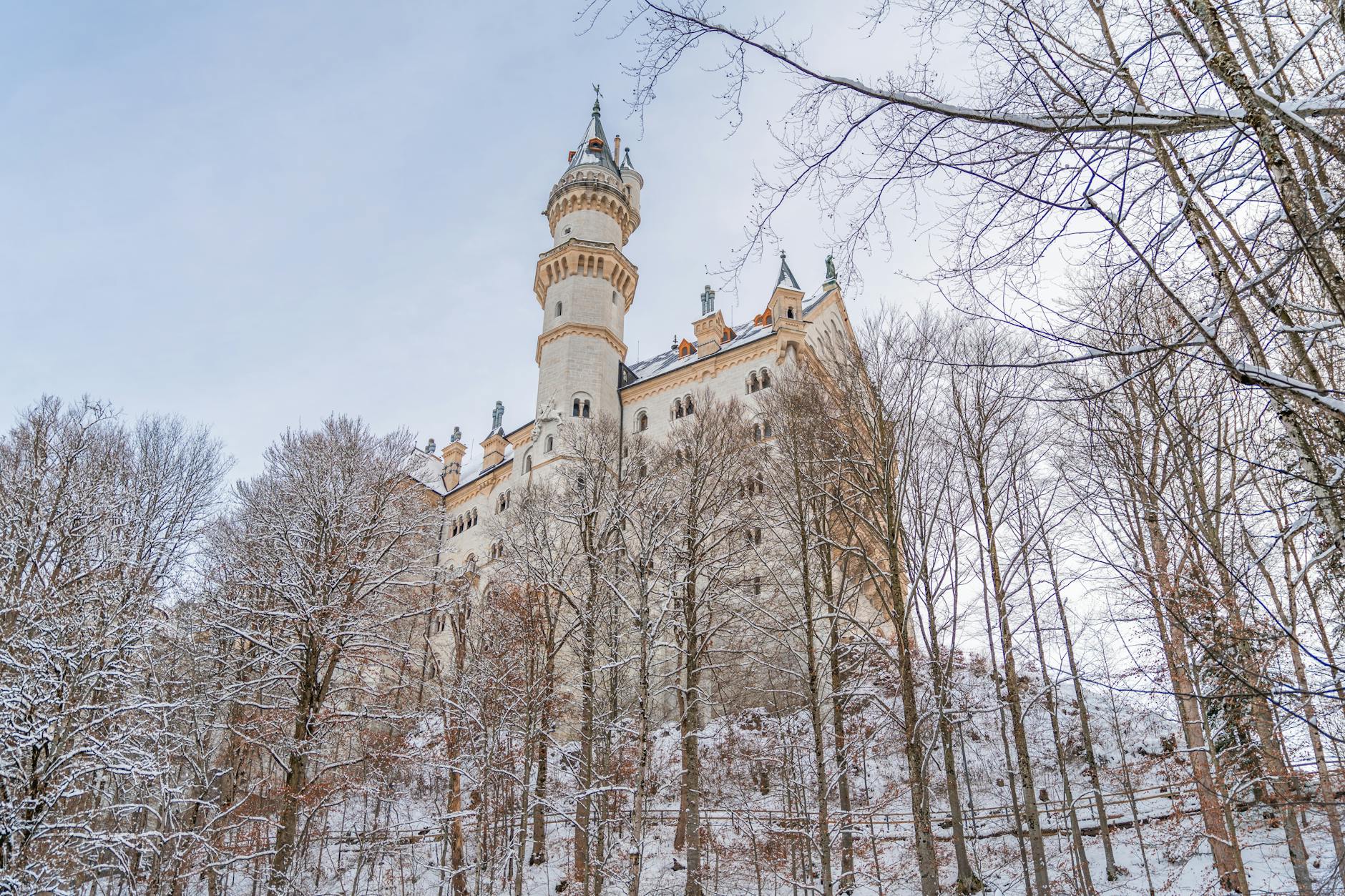
Ludwig II is the most famous Wittelsbach internationally — and a profoundly tragic figure. He inherited the throne at age 18, after his father’s sudden death. He was strikingly handsome, charismatic, and remarkably eccentric. His passions consumed him: Richard Wagner’s operas, medieval German legend (especially the Swan Knight), and Versailles-style architecture. He spent vast sums building fantasy castles outside Munich — Neuschwanstein (started 1869, never finished), Linderhof (1870-1886, completed), and Herrenchiemsee (1878-1886, never completed). The cost ruined the royal treasury and alienated his ministers. By 1886, the Bavarian government — frustrated by Ludwig’s mounting debts and increasingly erratic behavior — declared him insane and deposed him. Three days later, on June 13, 1886, he was found drowned in Lake Starnberg along with his psychiatrist Dr. Bernhard von Gudden. Officially ruled a suicide, the death has fueled conspiracy theories for over 130 years. Ludwig was 40 years old.
Otto (1886-1913) — The Mad King
Ludwig’s brother Otto was already known to be mentally incapacitated when he succeeded the throne — he had been kept in seclusion at Fürstenried Palace since 1875. Otto remained King of Bavaria in name only for 27 years (1886-1913), while his uncle Prince Luitpold ruled as regent. This formal arrangement preserved Wittelsbach dynastic continuity while acknowledging Otto’s incapacity. He died at Fürstenried in 1916, having essentially spent the last 40 years of his life unaware of his nominal royal status.
Prince-Regent Luitpold (1886-1912) — Belle Époque Munich
Prince Luitpold’s 26-year regency is the period most Münchners look back on as the city’s belle époque. Under his benevolent and politically distant administration, Munich expanded dramatically: the city’s population doubled to 600,000; the artistic scene flowered (Kandinsky and the Blue Rider; Thomas Mann; Rainer Maria Rilke); the modern Schwabing bohemian quarter was born; the Prinzregentenstraße was built. Luitpold himself was a beloved figure — modest, civic-minded, and patron of museums and the arts. The Prinzregent Theater on Prinzregentenplatz commemorates him.
Ludwig III (1913-1918) — The Last King
Luitpold’s son Ludwig III became King in 1913 after Otto’s formal deposition. He inherited the throne just in time for World War I — and in time for the German Empire’s collapse. On November 7, 1918, with Bavaria’s revolution underway, Ludwig III released his Bavarian subjects from their oaths of loyalty and quietly left the throne. He died in 1921, having been the last Wittelsbach to rule. Crown Prince Rupprecht (1869-1955) never reigned as king but remained the family’s symbolic head and led the family’s resistance to Nazi attempts to restore the monarchy.
The Wittelsbachs After 1918
The Wittelsbach family did not disappear with the monarchy. Crown Prince Rupprecht — who had commanded the German Sixth Army at the Battle of Verdun — became the family’s head and engaged in active opposition to the Nazi regime. He refused Hitler’s 1928 offer to restore the monarchy, recognizing the moral compromise involved. The family went into exile during the Nazi years; Rupprecht’s wife and son were imprisoned at Dachau and Buchenwald concentration camps in 1944 (they survived). After WWII, Rupprecht returned to Munich but never claimed political power. His descendants today — Duke Franz of Bavaria (born 1933), the current head of the House of Wittelsbach — live quietly in Bavaria with significant private wealth and considerable continuing cultural influence. The family maintains Nymphenburg Palace as a private residence (though the public parts remain open to visitors).
Visiting Wittelsbach Sites in Munich
- Munich Residenz — the family’s main palace; 130 public rooms across 10 courtyards; €17 combo ticket; 600 years of royal building campaigns
- Nymphenburg Palace — Baroque summer palace; €12-€17 depending on combo; tram 17 access
- Schleißheim Palace — “Bavarian Versailles” 14 km north; €8-€15 entry
- Cuvilliés-Theater — Rococo theater inside the Residenz; €5 supplement
- Königsplatz — Ludwig I’s New Athens; free outdoor square
- Ludwigstraße — ceremonial boulevard; free walk
- Theatinerkirche — Baroque royal church on Odeonsplatz; free
- Frauenkirche — late Gothic cathedral; free; tower €7.50
- Maximilianeum — Bavarian parliament; exterior view from Maximilianstraße
- Walhalla — Ludwig I’s hall of fame; near Regensburg; €4 entry
- Neuschwanstein — Ludwig II’s fairy-tale castle; €21; book ahead
- Linderhof Palace — Ludwig II’s completed castle; €10-€15
- Herrenchiemsee — Ludwig II’s unfinished palace on Chiemsee island
The Wittelsbach Legacy in Munich Today
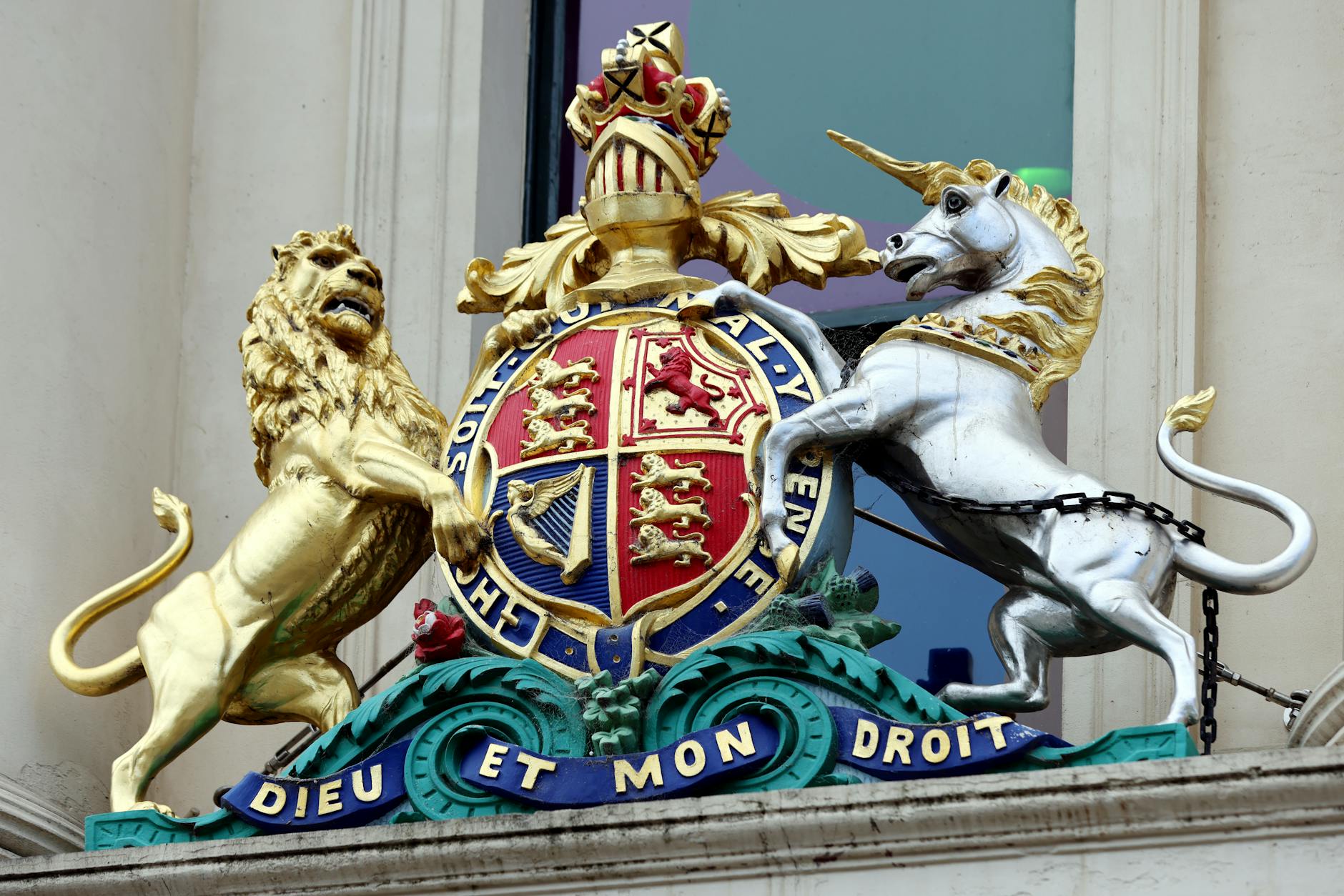
Modern Munich’s identity is inseparable from its Wittelsbach heritage. The Wittelsbach coat of arms appears on countless buildings; the family’s blue-and-white diamond pattern is the official Bavarian state flag; Munich’s most-visited buildings are nearly all Wittelsbach commissions. Annual events still maintain the dynasty’s cultural patterns: the Oktoberfest itself began as the 1810 wedding celebration of Ludwig I and Princess Therese; the Bavarian National Theater hosts opera in the same tradition as Ludwig II’s Wagner obsession; the Pinakotheken art museums fulfill Ludwig I’s vision of public arts education. The current Duke Franz of Bavaria attends major Munich cultural events; the family contributes to museum funding and historical preservation; the Wittelsbach Compensation Fund (established 1923) holds substantial cultural endowments that continue funding Bavarian arts.
Frequently Asked Questions
How long did the Wittelsbachs rule Bavaria?
The Wittelsbachs ruled Bavaria for 738 years — from 1180 (when Otto I of Wittelsbach received Bavaria from Friedrich Barbarossa) until 1918 (when Ludwig III released his subjects from oaths of loyalty). One of the longest hereditary rules in European history.
Who was the most famous Wittelsbach?
Ludwig II (“the fairy-tale king”) is the most internationally famous Wittelsbach — for his fantasy castles (Neuschwanstein, Linderhof, Herrenchiemsee), his mysterious 1886 death, and his Wagner obsession. Ludwig I is the most architecturally consequential — his New Athens transformed Munich. Crown Prince Rupprecht is the most historically important 20th-century member — leading resistance to Nazi attempts to restore the monarchy.
Do the Wittelsbachs still exist?
Yes. The current head of the House of Wittelsbach is Duke Franz of Bavaria (born 1933). The family lives privately in Munich and Nymphenburg Palace. They maintain significant private wealth and cultural influence but hold no political power. Crown Prince Rupprecht’s descendants continue the dynastic line.
What happened to King Ludwig II?
On June 13, 1886, three days after being deposed and declared insane, Ludwig II was found drowned in Lake Starnberg along with his psychiatrist Dr. Bernhard von Gudden. Officially ruled a suicide, the circumstances have fueled conspiracy theories for over 130 years. Ludwig was 40 years old. His body lies in the Michaelskirche crypt in central Munich — free entry.
Where can I see Wittelsbach palaces?
The Munich Residenz is the family’s main palace — 130 public rooms, €17 combo ticket. Nymphenburg Palace is the Baroque summer palace — €12-€17. Schleißheim Palace north of Munich is the “Bavarian Versailles” — €8-€15. Neuschwanstein and Linderhof outside Munich require day trips. See our Neuschwanstein guide.
The Wittelsbach Dynasty’s European Reach
Beyond their 738-year rule of Bavaria, the Wittelsbach family produced rulers and consorts across European thrones — a remarkable diplomatic and dynastic accomplishment. Wittelsbach members held the thrones of Bohemia (1742-1743 as Karl VII, Holy Roman Emperor), Hungary (briefly under Karl VII), Sweden (Karl Knutsson Bonde and his successors in the 1500s), Denmark (Christopher of Bavaria, 1440-1448), Greece (Otto of Greece, 1832-1862), and connected to the British royal family through William III of England (1689-1702), a Wittelsbach via the Palatine line. The Bavarian Wittelsbachs and the Palatine Wittelsbachs split in 1294 and operated as separate branches with significant intermarriage; they were reunited only in 1777 when the Bavarian line went extinct and Karl Theodor of the Palatinate inherited Bavaria. The Wittelsbach Compensation Fund (Wittelsbacher Ausgleichsfonds), established in 1923, holds substantial cultural endowments that continue funding Bavarian arts and historical preservation — making the dynasty’s economic and cultural impact continue more than 100 years after the monarchy ended.
The family’s European intermarriages produced complex relationships. Empress Elisabeth of Austria (Sisi) was a Wittelsbach (born Duchess Elisabeth in Bavaria, 1854 marriage to Emperor Franz Joseph I of Austria); she shaped European royal fashion and culture from her position. Queen Maria of Hanover was a Wittelsbach. King Carol II of Romania was a Wittelsbach descendant. The Saxe-Coburg-Gotha dynasty (which produced Victoria of England’s husband Albert and through them the modern British royal house of Windsor) has Wittelsbach roots. The family’s diplomatic marriages were calculated political tools — every major European court of the 17th-19th centuries had at least one Wittelsbach connection. This explains some of the Bavarian royal cultural pride: the Wittelsbachs weren’t merely a regional dynasty but an European royal house with global connections.
Visiting Royal Sites: A Wittelsbach Heritage Tour
A dedicated Wittelsbach heritage tour can fill 4-5 days. Day 1 in central Munich: the Munich Residenz (10+ courtyards, 130 rooms, Antiquarium hall, Treasury); the Theatinerkirche (Wittelsbach royal church); Odeonsplatz with the Feldherrnhalle; Maximilianstraße with the Maximilian-style buildings; the Bayerische Staatsoper National Theater. Day 2: Nymphenburg Palace and gardens (full day; combine palace, Amalienburg, Badenburg, Pagodenburg, and Magdalenenklause pavilions); evening at the Cuvilliés-Theater inside the Residenz for chamber music. Day 3: Schloss Schleißheim (“Bavarian Versailles” 14 km north of Munich); the Schleißheim Old Palace; Lustheim Palace’s porcelain museum. Day 4: Day trip to Neuschwanstein and Hohenschwangau (Ludwig II’s childhood home + fantasy castle); see our Neuschwanstein day trip guide. Day 5: Day trip to Linderhof Palace (Ludwig II’s completed castle); or alternatively the Walhalla hall of fame near Regensburg (Ludwig I’s neoclassical monument).
The Mystery of Ludwig II’s Death — A Continuing Story
King Ludwig II’s death in Lake Starnberg on June 13, 1886, remains officially unresolved 140 years later. The official version: Ludwig was committed to Berg Castle on Lake Starnberg three days after his deposition; on the evening of June 13, he and his psychiatrist Dr. Bernhard von Gudden took a walk along the lake shore; they were found drowned in shallow water at approximately 23:00. The official cause: Ludwig drowned von Gudden during a struggle, then drowned himself. The investigation found no physical evidence of foul play. However, several details have fed conspiracy theories: Ludwig was apparently in good physical health and a strong swimmer; the water depth where the bodies were found was waist-deep, making accidental drowning unlikely; some witnesses claimed to have heard gunshots from the lake area; Ludwig’s clothes showed evidence of a struggle. Conspiracy theories have proposed: assassination by Bavarian government agents to prevent any restoration attempt; assassination by Prussian agents (Bismarck’s government had reason to want Ludwig dead); accidental death covered up; suicide pact between Ludwig and von Gudden. The Royal Bavarian Archives released some documents in 2010 that fueled new investigations; serious historians continue researching but consensus remains elusive. Ludwig’s body lies in the Michaelskirche crypt in central Munich; visiting the tomb is free.
Wittelsbach Art Patronage: How One Family Built Munich’s Museums
Munich’s standing as a museum city is a Wittelsbach inheritance rather than an accident. Successive dukes, electors, and kings spent the family fortune on art, and much of what fills the city’s galleries today was assembled by them. Duke Albrecht V founded the court library — now the Bavarian State Library — in 1558 and bought antiquities by the crateload. Elector Maximilian I cornered the market on Albrecht Dürer in the early 1600s. But the great collector-builder was King Ludwig I, who in the 1830s raised purpose-built temples for the family’s holdings: the Glyptothek for Greek and Roman sculpture, and the Alte Pinakothek, which opened in 1836 as one of the first public art museums anywhere. The masterpieces you queue for now — Dürer’s self-portrait, Rubens by the roomful — hang there because a Wittelsbach bought them.
| Institution | Wittelsbach founder | Year |
|---|---|---|
| Alte Pinakothek | Ludwig I | 1836 |
| Glyptothek | Ludwig I | 1830 |
| Court Library (now Bavarian State Library) | Albrecht V | 1558 |
| National Theatre (opera house) | Maximilian I Joseph | 1818 |
| English Garden | Karl Theodor | 1789 |
You can still walk the through-line in an afternoon. The Pinakothek museums hold the painting collections; the wider Munich museums and culture scene grew out of the same royal patronage; and the English Garden, laid out under Elector Karl Theodor in 1789, was an Enlightenment gift of public green space from the crown.
The Crown Jewels in the Residenz Treasury
The most concentrated display of Wittelsbach wealth sits in the Schatzkammer, the Treasury of the Residenz: ten rooms of regalia spanning a thousand years. The showpiece is the royal crown of Bavaria, made in Paris in 1806–07 after Napoleon elevated the duchy to a kingdom — and never actually worn at a coronation, because Bavarian kings were proclaimed rather than crowned. Close by sits the dynasty’s oldest treasure, the so-called Crown of Princess Blanche, an English royal crown that entered the family around 1402 through marriage. The undisputed star is the Renaissance statuette of St George, a 1586–97 confection of gold, enamel, agate, and more than two thousand diamonds commissioned by Duke Wilhelm V. Allow an hour, and combine it with the state rooms — our Munich Residenz guide covers tickets and the route, and the palace remains one of the city’s essential landmarks.
Continue Exploring Munich History
This Wittelsbach guide is part of our deeper Munich history and architecture pillar. For the broader timeline see our history of Munich. For specific buildings see our things to do guide. For the dark 20th century see our WWII history guide.
Leave a Reply